Industry project
DAS D.I.A.L.: individualised AI learning for dyslexic learners
A platform where therapists turn assessment data into learner profiles and generate curriculum-grounded literacy activities. I built the RAG retrieval and review pipeline.
The problem
An industry project with the Dyslexia Association of Singapore for Elements of Software Construction (50.003). The brief asked for at least two connected subsystems from a seven-part AI learning suite. We took:
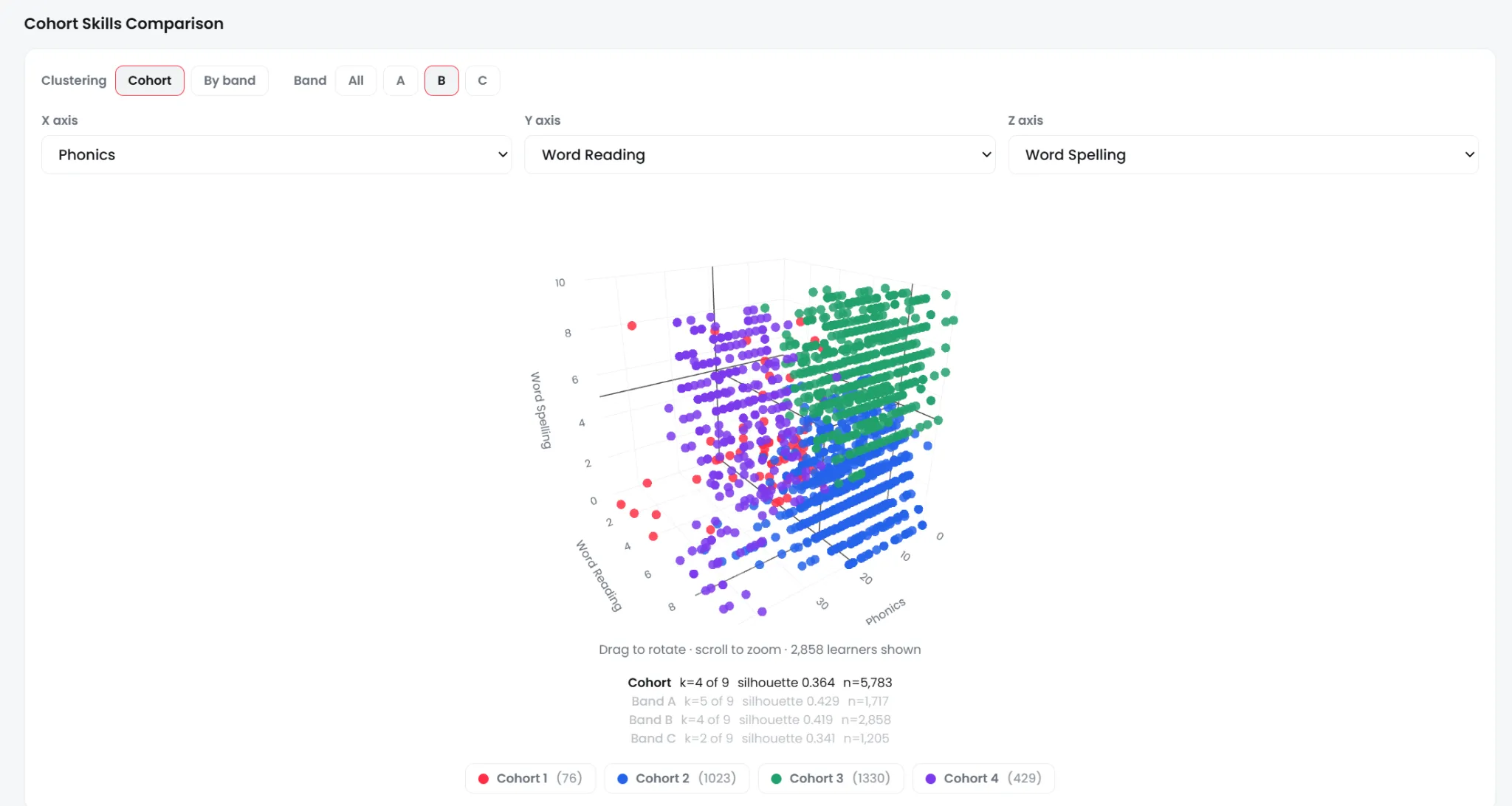
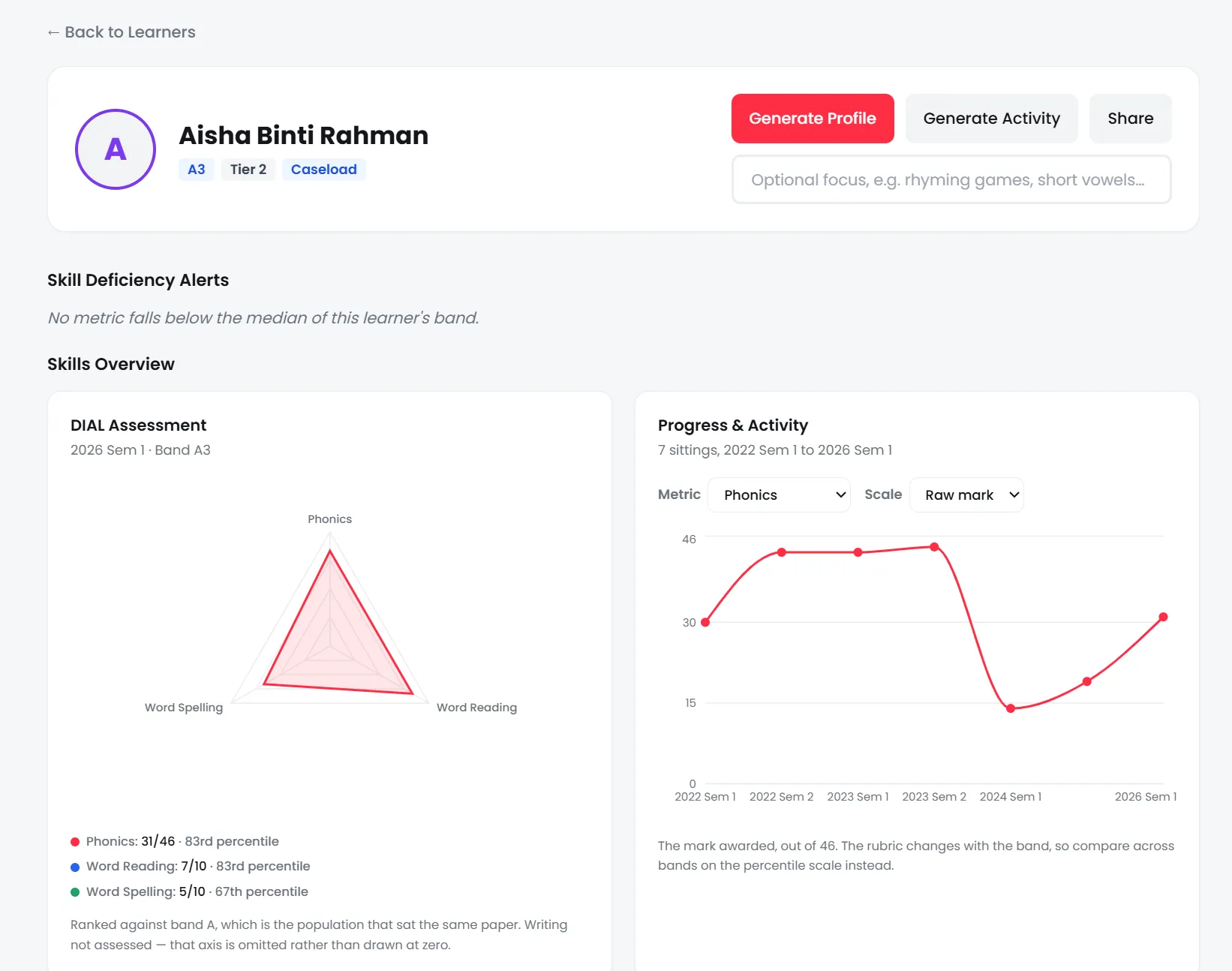
- Cognitive Profiling System: turning assessment and screening data into interpretable learner profiles.
- Adaptive Learning Activity Generator: using generative AI and RAG to create differentiated literacy activities grounded in DAS curriculum resources, while cutting educator prep time.
What I built
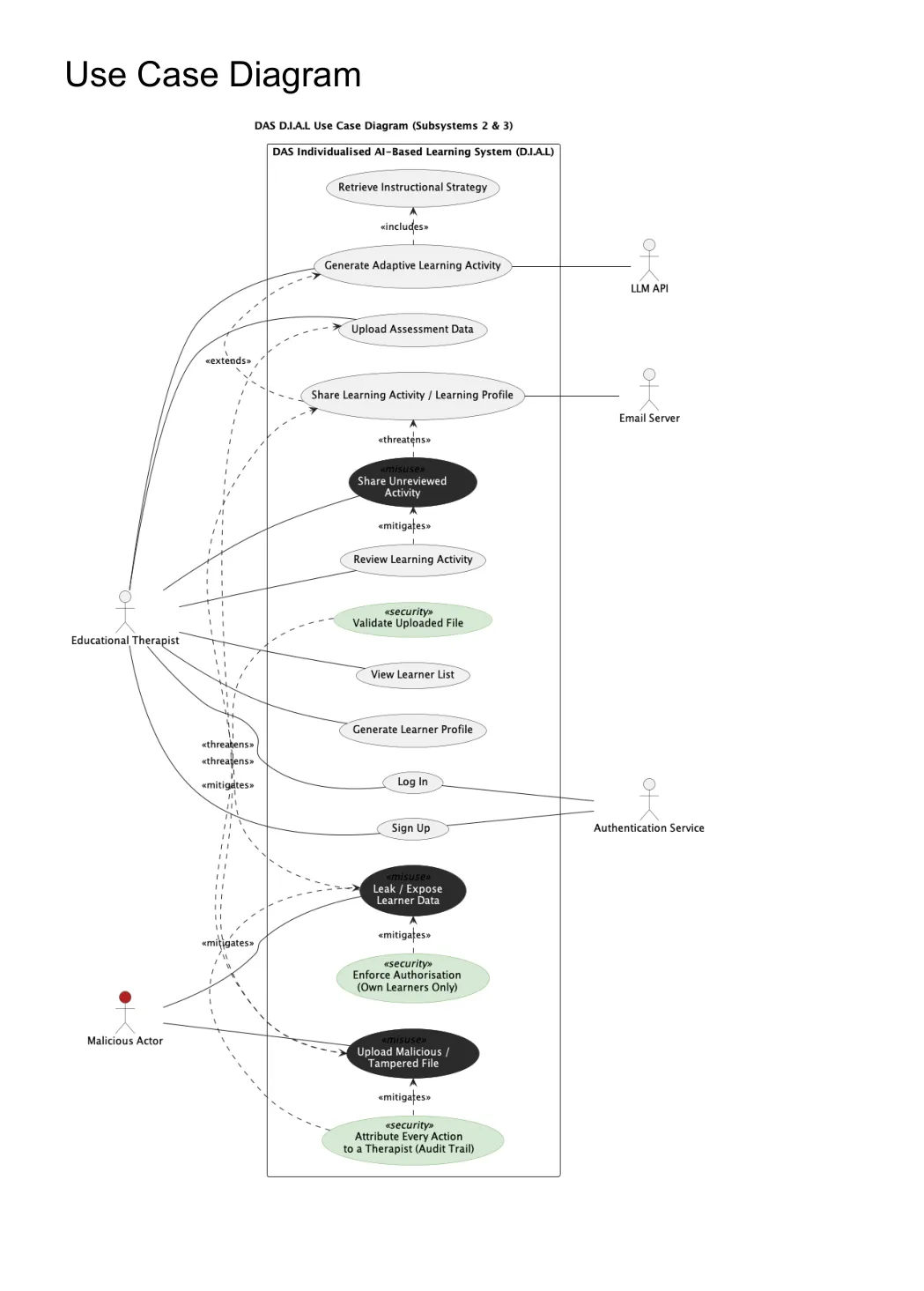
My part was the RAG retrieval and learning-activity review pipeline. It grounds outputs in DAS curriculum resources through embeddings tuned on a labelled query set, and therapists approve activities before they’re shared. Specifically, I:
- Chunked and embedded the curriculum corpus into a pgvector knowledge base.
- Built the hybrid-search retrieval service and connected the RAG subsystem to the front end.
- Worked on the flow where therapists review generated learning activities.
Each activity is drafted by a generative agent from the retrieved curriculum units, then checked by a validating agent against a review framework before a therapist sees it.
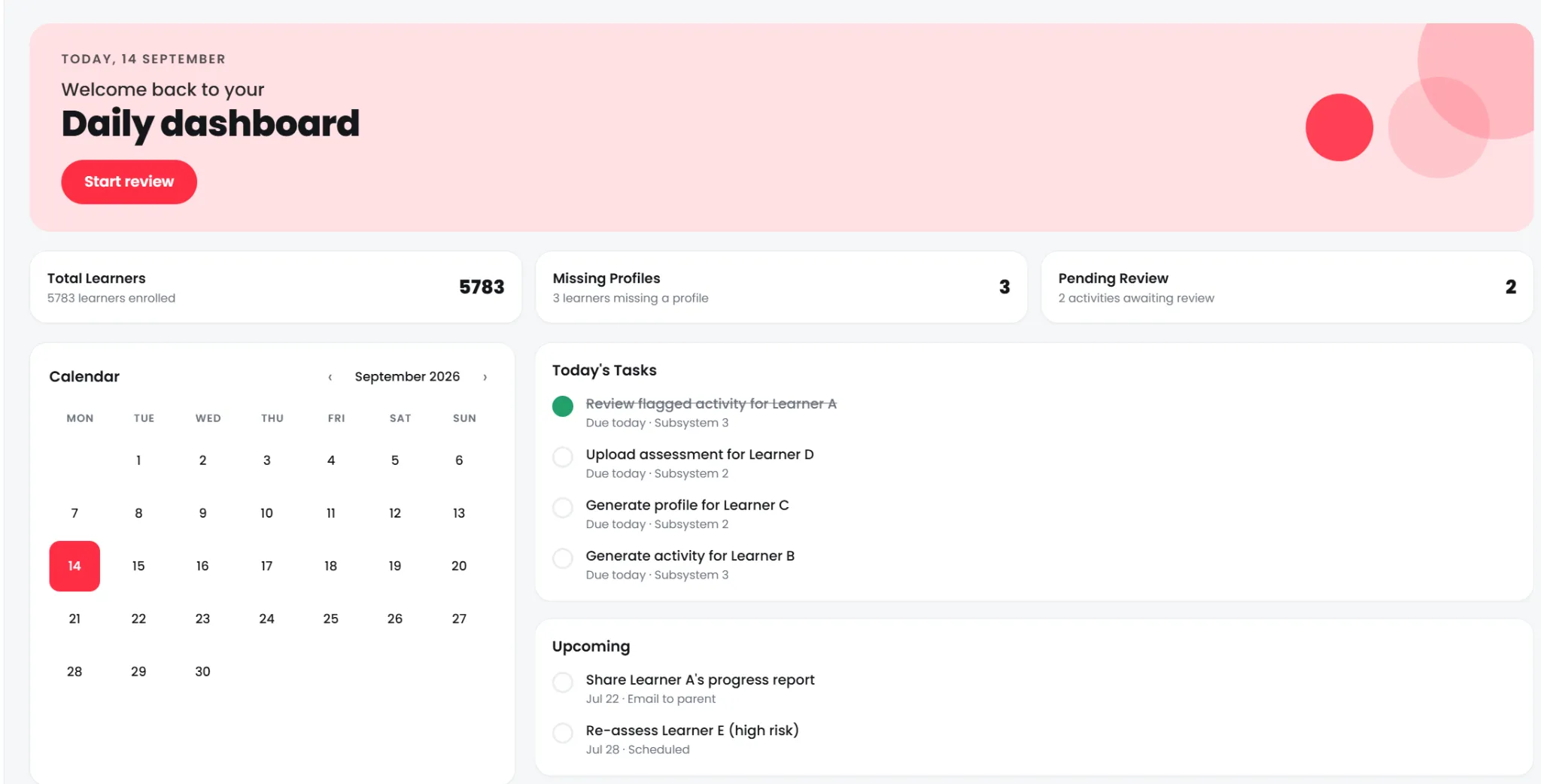
The platform around it: therapists upload assessment data, generate learner profiles, retrieve curriculum material, create, validate and review activities, and export approved ones as PDFs. Built with React, FastAPI and Supabase, with CI testing.
TODO: Confirm with DAS that these screenshots can be shown publicly, and that the learner in the profile view (“Aisha Binti Rahman”) is demo data.
Result
The platform is live at das-dial-7y5.pages.dev.
What I learned
Design AI features around measurable retrieval quality rather than model hype. Also, how to coordinate interfaces and responsibilities across a team.
More images