Research
Agentic AI for Serious Illness Conversations
A stateful agent that holds structured Serious Illness Conversations with caregivers while clinicians stay in control. In user acceptance testing at SGH.
The problem
Serious Illness Conversations (SICs) help clinicians understand a patient’s values, goals, fears and priorities when planning care for advanced cancer. The brief, from Singapore General Hospital and the National Cancer Centre Singapore: an agentic AI assistant that holds structured conversations with caregivers (and possibly patients), with measurable evaluation metrics, tested in clinical settings, with clinicians kept in control.
What I built
- A stateful LangGraph agent (Python/Flask, Gemini function calling, SQLiteCloud checkpointing) with interrupt/resume workflows and persistent multi-session conversations.
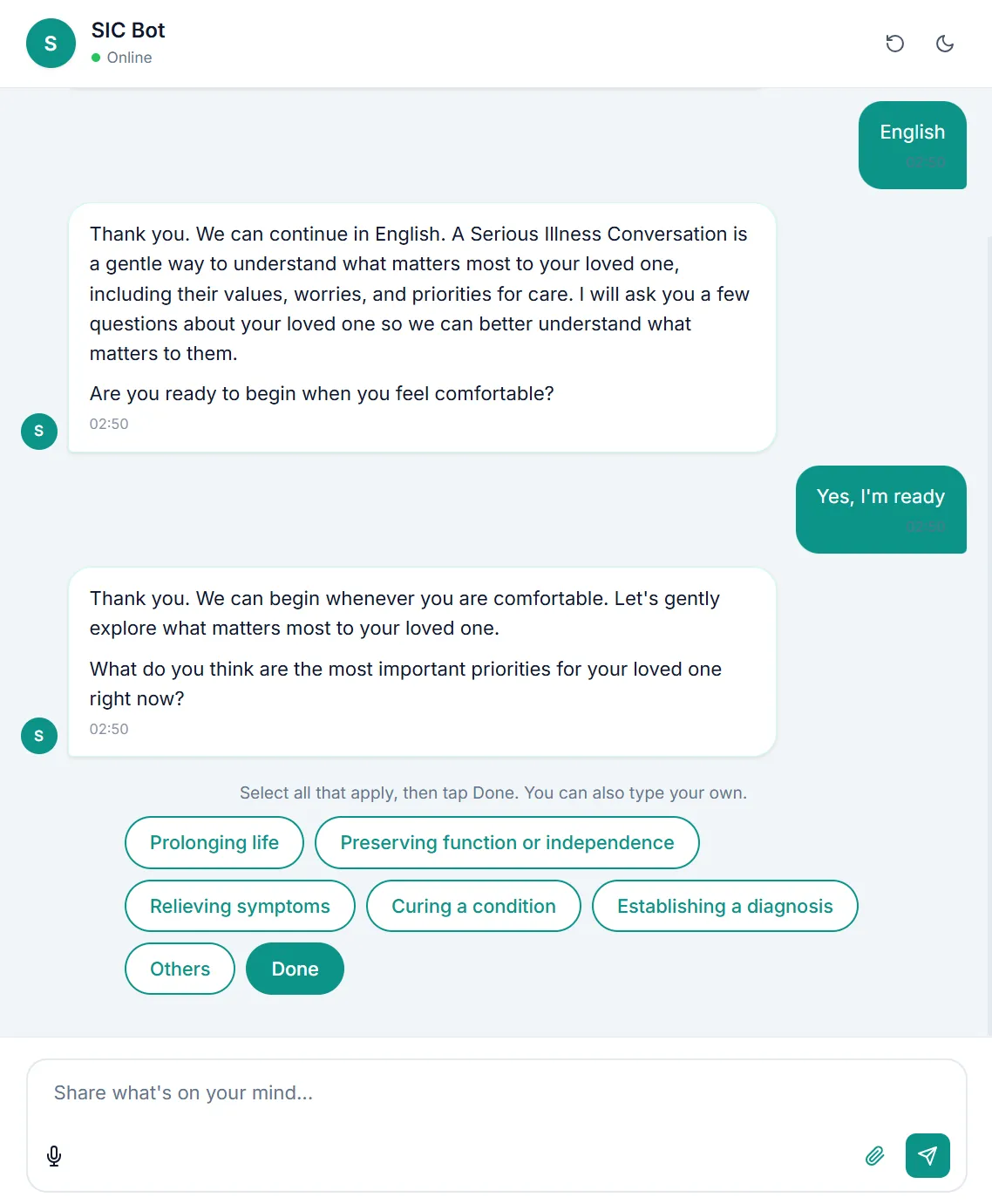
- Human-in-the-loop clinician workflows for caregiver-patient alignment: SIC extraction, bilingual dialogue, distress monitoring and AI-generated session summaries.
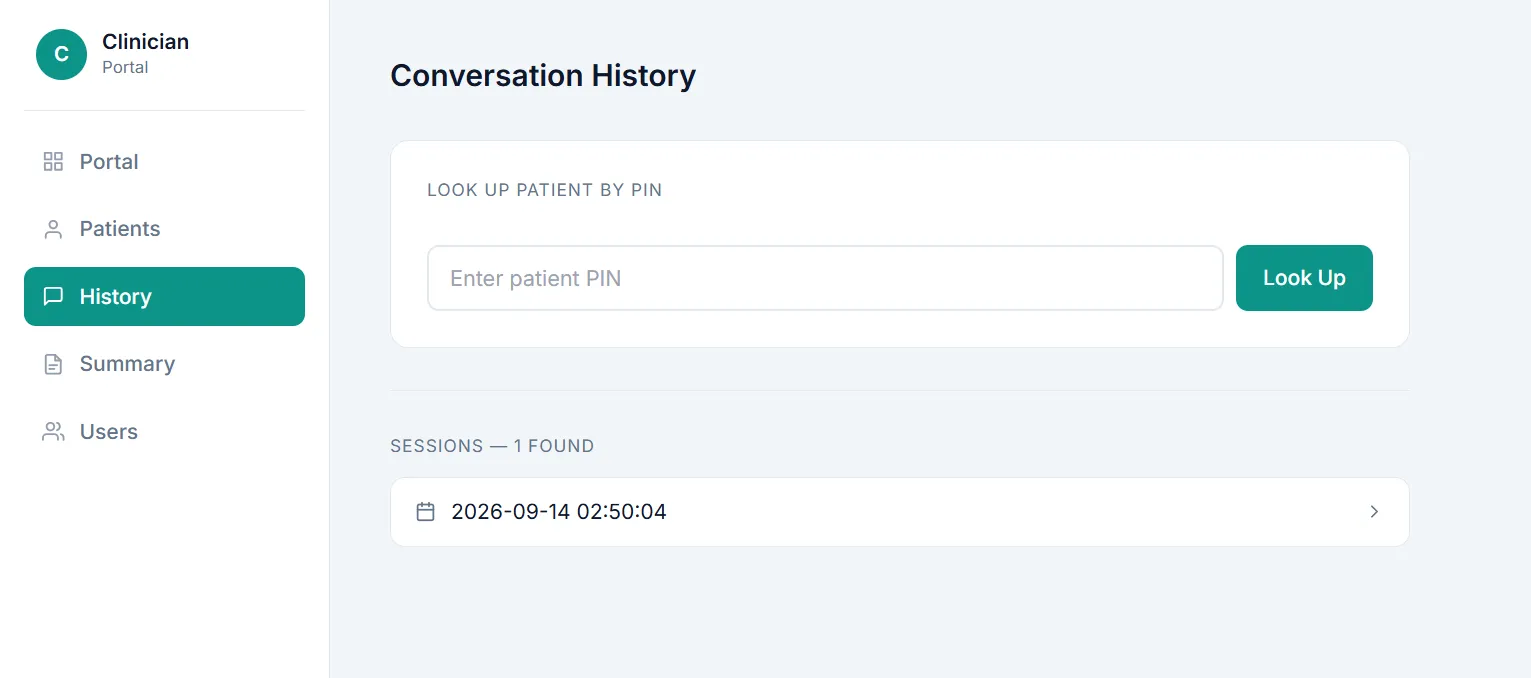
- A caregiver-facing chatbot, plus a clinician portal for managing patient context and reviewing conversation history.
- Automated testing, static type checking, structured logging and GitHub Actions CI.
I also worked with clinical stakeholders to map and refine care workflows and evaluation criteria.
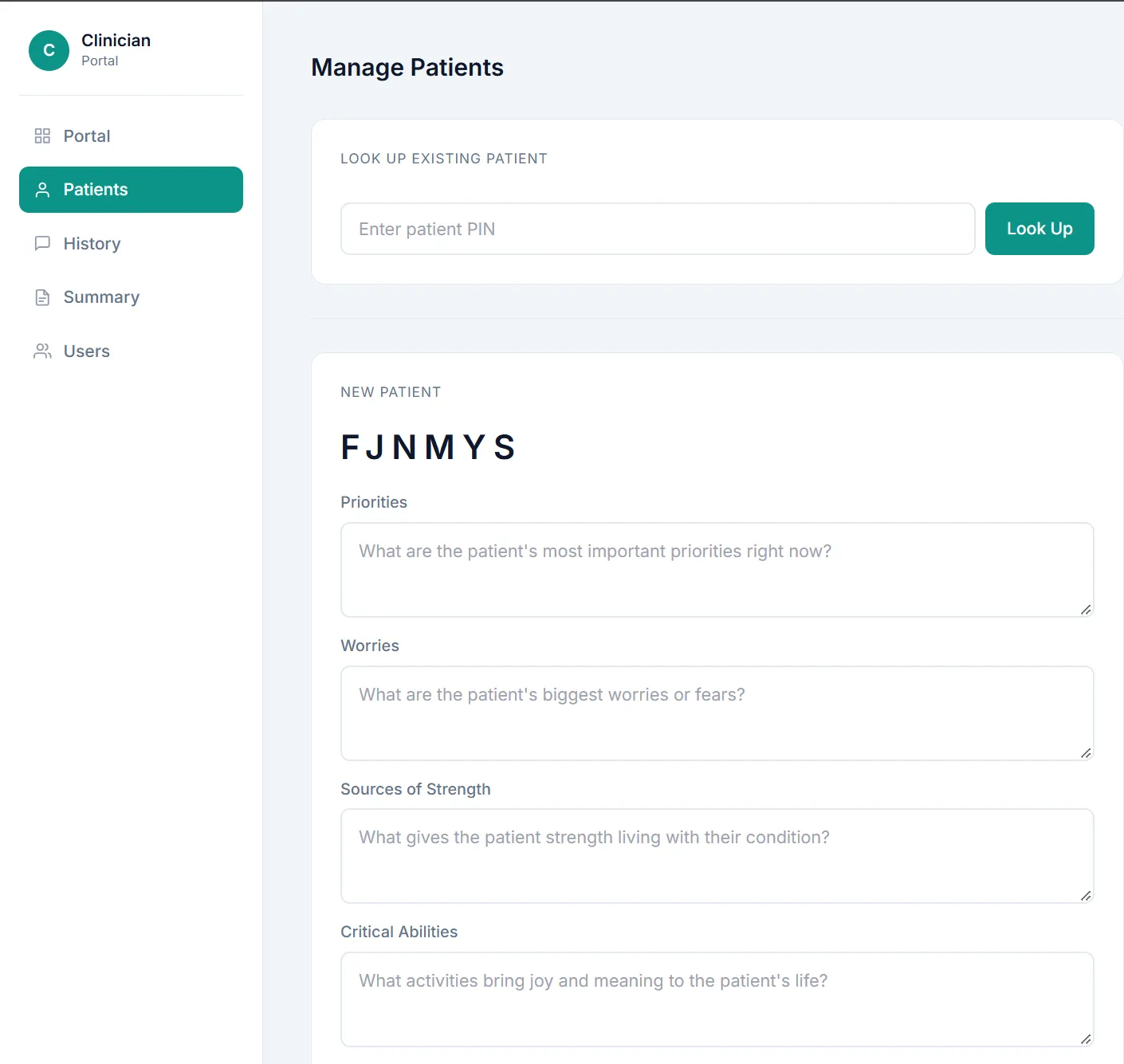
TODO: Confirm with SGH/NCCS which screenshots can be shown publicly. Use dummy-data screenshots only; no real patient or caregiver data.
Result
A working system, now in user acceptance testing with patients and caregivers.
What I learned
Conversational AI changes when the goal isn’t helpful text but supporting a sensitive, high-stakes conversation while clinicians stay in control.
More images